Showing posts with label art. Show all posts

Thursday, December 13, 2012

Would you believe? Ana found a mola store!


Frequent visitors to Ana Darcy's blog know of Ana's love of the folk arts and textile arts of Earth. She visits every exhibit she can find of folk toys, dia de los muertos artifacts, paintings, arpilleras (textile sculptures), and molas from Panama (essentially folk paintings with fabric). We have covered many of these here.

One post, on the mola, elicited a comment from a woman in Panama who sells molas online. Florymola.com is a lovely website with hundreds, perhaps thousands, of molas on sale, plus information about the art form, the women who create them, and more.

We couldn't help it: we had to order some. They measure about 10 x 15 inches (25 x 40 cm) and are pictured below, front and back. At the same time very simple yet extremely intricate, they are immensely creative and colorful: totally unique, lovely art.

They could be framed, made into cushions, handbags, or added to clothing to stunning effect. They weren't expensive: only about $10 each. They mail all over the world. Mail to the United States takes three to six weeks.

We wouldn't be surprised if Ana Darcy accumulates quite a collection--but she'll do it under an alias, of course!

(Click for a full-size slide show.)

A frog


Two birds


Birds and...a bat?


http://www.florymola.com

(See the first paragraph above for links to other posts to Ana's favorite folk art.)

Do you know Ana Darcy, our Distant Cousin


Thursday, November 15, 2012

Is this an arpillera or not?


Those familiar with Ana Darcy's blog will know her fascination with folk arts and folk toys. Apparently there are similar features among the people of her own planet, Thomo--similar, but different, of course, given the variations of human cultures.

We have shown many examples of the lovely textile sculptures of the Americas, called arpilleras in Spanish. Here is yet another one...we think. Maybe. The arpilleras shown on other pages of this blog maintained for the extraterrestrial Ana are all entire compositions, pictures, as it were, usually with a theme of some kind, often moral.

The example above is not like that. It's a collection of 32 handmade fabric dolls which in other contexts could be members of a classic arpillera. Whether it's an arpillera or not, we can agree that it's a striking piece of art. (It was created in Honduras.)

To better show the three-dimensional character of this bag, here's a photo from one side:


Both photos are generously sized to show details. Merely click either one for a much better look. The X in the top right corner will bring you back to Ana's blog.


There is much more of Ana's favorite art in the column to the right, under the photo of the blue-eyed kitty, including molas, murals, clothing, dia de los muertos figurines, and folk toys to name just a few!

NOTE: There is a great deal of art, poetry, music, architecture and the like on Ana's blog, yet the Distant Cousin stories do not dwell on these. They tell the tale of the first human to return to Earth. The fact that that human loves our art, music, and so forth is celebrated here, but to enjoy Ana herself and learn to know her well, you should try one of her books!


Friday, August 3, 2012

Time for some Mexican folk masks!

Everyone loves a good mask. We learn in childhood that a mask ignites our imagination. A mask allows us to pretend, to experiment with different identities, to become something other than we are. Adults use masks too, for disguise or to perform or entertain.

Ana Darcy Méndez, hailing from the planet Thomo but now living on Earth, in New Mexico (as detailed in Distant Cousin), remembers masks from her childhood. Some of those masks demonstrate the Thoman people's cultural memories of animals on Earth, still recognizable after several thousand years of separation. Others are devoted to animals from the planet Thomo. Both types retain considerable totemic power.

This may explain why Ana is so fascinated with the imagination and creativity seen in Mexican folk masks. She has a small number hanging in her house, but she has friends and acquaintances who actually collect them. Fortunately for us, those friends have allowed us to present a representative sampling here. You may come to realize why someone from another planet would find them fascinating! Click any to enlarge.


MORE!


Monday, July 23, 2012

Incredible Mexican pottery from Mata Ortiz!


Mata Ortiz, a town in northern Chihuahua, Mexico (MAP), is justly famous for its world-class ceramic art. Mata Ortiz also happens to be a venue in Distant Cousin: Recirculation. Novels being what they are, photographs are seldom present, but the work of the artists in Mata Ortiz deserves to be more widely known than it is now--that is, mainly by collectors, art galleries, and cognoscenti.

Our extraterrestrial friend Ana Darcy Méndez lives in southern New Mexico, only about 150 miles from Mata Ortiz, and thanks to her in-laws knows it well. She is not a collector but a friend of a friend has collected pieces from Mata Ortiz for years. Here is a representative sample. The small ones below are called "seed pots." (Click any to enlarge; click the X to return.)


(includes arpilleras, molas, and clothing)


Saturday, July 21, 2012

Ana finds a treasury of molas and Mexican art!


You might expect that the first human extraterrestrial woman to return to her home planet (Earth) would be a collector, and that she would be delighted by all the novel things to be found around her and want to keep a selection with her at all times.

If you'd expect that you would be wrong. Ana Darcy does indeed love much of Earth's surprising bounty, but such is her personality that she prefers living simply, and having around her only the most utilitarian, necessary objects for daily life. She loves museums, however, and loves visiting other people who are collectors--which is why she was so delighted to meet the friend of a friend who collects Mexican art, something Ana feels a spiritual connection to.

We have already presented some of the arpilleras, molas, murals, paintings, clothing, and sculpture that Ana has enjoyed to date. Below is a preview of some of the Mexican folk art (and some slightly more formal art) in the collection of her friend's friend. (Click any to enlarge; click the X to return.)

The total collection is astounding. In the near future we will present more of these delightful, imaginative artworks.

Molas! See the mermaid?


Clothing (huipil):


Masks:


Ceramics:


Monday, July 2, 2012

More textile sculpture: Mexican dolls!


Ana found these stunning handmade Mexican folk dolls at a friend's home and fell in love with them immediately. The one on the right is eight inches (20 cm) tall. Two have tiny babies slung on their backs!

Ana says the people on Thomo, her home planet, have nothing resembling a "toy industry," and mothers (and grandmothers) tend to make dolls and toys for their youngsters. Some Thoman clothing, she says, even resembles the Mexican styles seen here. (Click to enlarge.) 

She admits regretting that she had nothing this precious for her own daughter, but she's going to try to collect some now. It's never too late!

See much more of the textile art of Earth Ana has enjoyed below. You will notice that most of it is Latin in nature, from Central and South America. That's because Ana lives in a Mexican-American household in New Mexico. She would welcome reader suggestions for more textile folk art from other parts of the world!


Tuesday, April 24, 2012

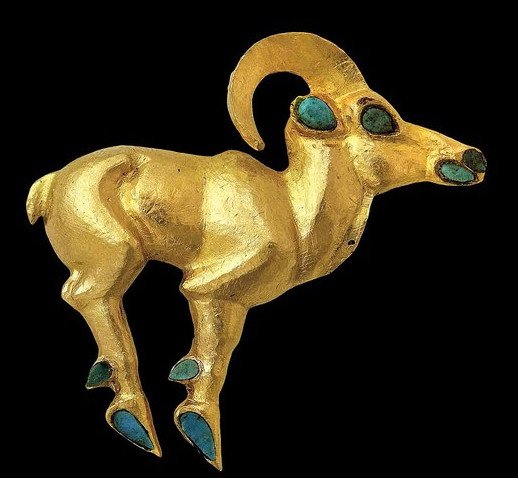
Art from kurgans in Khazakhstan: Ana's Earthly Ancestors?

Feline head


Readers of Ana's stories know that Ana is descended from humans who, some thousands of years ago, were transplanted to the planet Thomo, 25 light years away. The first to find her way back, she has been eager to pursue what few clues there are as to just where on Earth her people originated.

An argali (mountain sheep)


For the most part those clues are linguistic: her language, Luvit, has been shown (in Distant Cousin) to be an early spinoff of the large Proto-Indo-European language family, originally spoken by the peoples living north of the Black Sea and Caspian Sea. They were nomadic and preliterate and thought to have left few durable items that might have survived to interest modern archaeologists--no cities, bridges, aquaducts, statues, or the like.

A raptor head

But that notion may be mistaken. There is now an exhibit in New York City of works of art discovered in kurgans (burial mounds) in Khazakhstan, the ninth largest country in the world, north of the Caspian Sea. These works were created from the ninth to the first centuries B.C. (slightly after Ana's people are thought to have been removed). 

A feline attacking a horned animal

As you can see, they are are remarkable, and reveal a love of the natural world and a wonderfully creative artistic instinct. If you care to note some of the art that Ana has loved elsewhere in this blog  you can see how she might like these ancient treasures as well. And not only that--you might also come to understand why she loves cats! 

Two deer heads


See more of Ana's taste in art in the right column under the picture of the blue-eyed kitty, and under the photo of the LOVE sculpture, including:


Sunday, April 1, 2012

Wearable art from Ecuador, Guatemala, and Mexico!


We have mentioned elsewhere that the people on Ana Darcy Méndez's home planet, Thomo, are fond of decoration and the arts. In a forthcoming post we will show some samples of ancient art originating from the historical area on Earth her people are believed to have come from. 

We have also mentioned that Ana has been taken by the arts on Earth, and particularly by textile art. (See below for examples of arpilleras (textile sculptures) and molas (amazing fabric creations from the Kuna people of Panama). 

Now we have some examples of wearable art from Mexico, Guatemala, and Ecuador. We could not ask Ana to send photographs of her own clothing, but friends of hers have very kindly allowed us to present some examples of theirs, with our very grateful thanks. 

It's easy to see why Ana would love these creations. They are colorful, immensely creative, beautifully human, lively, unique, and not least important, comfortable to wear! 

Note: these photos are generously sized. Click any to enlarge!

Above, a huípil from Guatemala. Below, nine items from Mexico.


A jacket from Mexico (one of Ana's very favorites):


Ecuador, Guatemala, Mexico (left to right):


Guatemala, Mexico, Guatemala (each photo):


Molas, from Panama: part 1, part 2

Arpilleras from Ecuador & Peru, part 1, part 2, part 3


Investigate Ana's innovative recipes and favorite poems, too, in the column on the right, and also her ideas on education, aliens on Earth (ahem), her favorite shoes, photographs from sites of her adventures, and much more!

Saturday, February 18, 2012

More Panamanian molas, incredible textile art


Here are some more examples of the multi-layered Panamanian molas that Ana loves so. (The first installment is here.) No matter what planet one is from, anyone with an eye for color and design will be understandably struck by these gorgeous works of art.

Ana particularly loves the zest for life embodied in these works (and in the arpilleras and other Latin-American art elsewhere on her blog). Many reveal a fascination for human, animal, and plant forms--art that springs from nature, in other words. Some may dismiss it as "folk art," but to Ana, whose ancestors on Thomo barely survived hard times, there is no more precious, more cherished, force in the world than life itself.

Above is a mola turned into a lined vest by someone who labeled it for sale. This is not typical of most molas, which generally seem not to have been created with commercial purposes in mind. Below are more typical examples of this amazing art form. (Click for more detail.) First, a jungle scene with a boat and at least five human figures:


Here are a bat, we believe, and a bird, in molas that were "repurposed" and sold after their owners felt they had fulfilled their original use:


This is one of the more extraordinary molas Ana knows of. We do not know how old this artwork is, but it's possible that the artist could have created it after having seen her first helicopter:


Here is a detail from the mola above to show the fine stitching:


Finally, here is a mola which depicts something we cannot identify. After that photo there is another of the same mola from the back, and then a detail of the back. Quilters, textile enthusiasts, and artists in general will be fascinated to examine how these unique works were created.


See more of Ana's favorite art, music, and poetry in the column to the right, under the photo of the LOVE sculpture-->

The mola, part 1